
The supply gap NIC MAP® projected two years ago hasn't closed. It's grown.
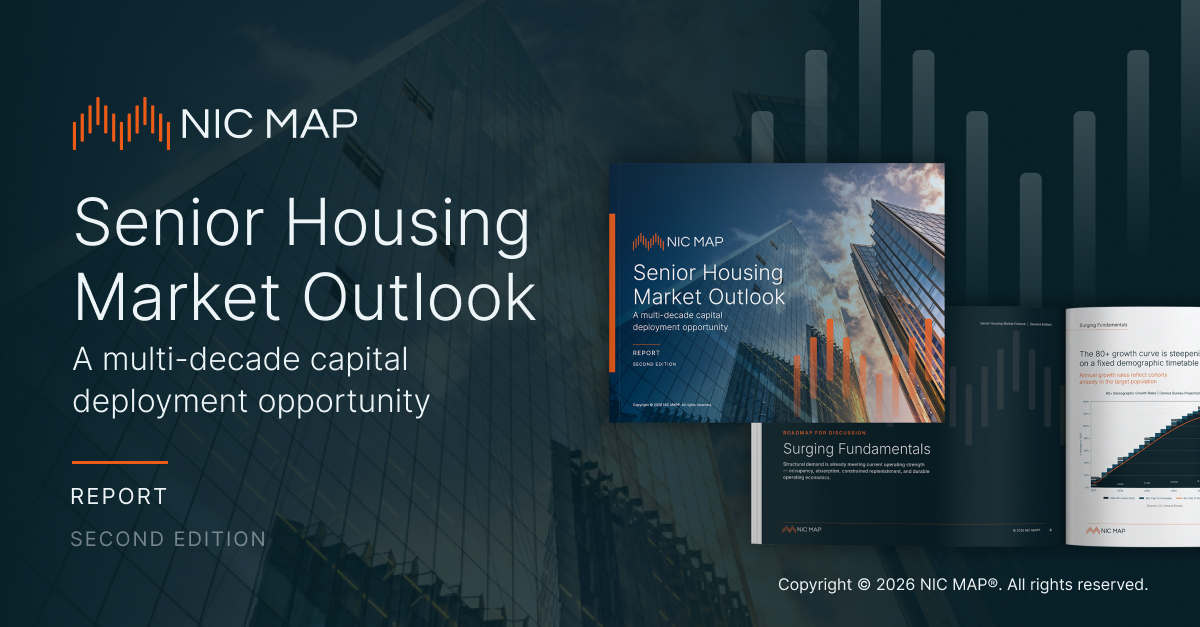
The second edition of the Senior Housing Market Outlook tracks what's changed since the first report and where the industry stands as the steepest 80+ growth in U.S. history gets underway. Demand has exceeded expectations. Construction hasn't kept pace. And the investment required to meet the needs of the 80+ population keeps climbing.

What Does This Analysis Show?
A Widening Supply Gap
Annual demand will soon require more than 100,000 new senior housing units per year. The industry continues to deliver roughly 10,000. Every year of underbuilding adds to a cumulative deficit that will leave the nation over half a million units short by 2030.
The Demographic Wave Is Here
The first Baby Boomers turned 80 in 2026. The 80+ population is adding more than 1 million people per year by the early 2030s.
A Trillion-Dollar Investment Need
Maintaining today's level of senior housing availability will require more than one trillion dollars in new investment through 2050. That's the minimum to hold the line, and one of the largest unmet capital deployment opportunities in commercial real estate.
Fundamentals Backing the Thesis
Senior housing delivered the highest annualized total returns of any NCREIF property type in 2025, and occupancy has posted four straight years of 200+ basis-point gains. Capital markets are taking notice.
The Gap Is Compounding
- Construction starts remain near historic lows: New development continues to deliver only a fraction of what the growing 80+ population will require.
- Underbuilding compounds: Each year at the current pace widens the cumulative shortfall projected in the first edition, and the steepest demographic growth is now two years closer.
- The demand is locked in: The 80+ population of the next two decades is a known quantity, not a modeled assumption. The question isn't whether demand arrives, it's whether the industry builds enough to meet it.
Gain access to the complete Senior Housing Market Outlook report with detailed statistics, projections, and actionable insights crucial for navigating the evolving senior housing market landscape.
Fill out the form to download the full report:
The Intra-Quarterly Data for September 2024 was just released in the NIC MAP platform. Highlights from the Primary and Secondary Markets include:

